Replacing control panel components
By Tristan Newton, Commercial Director · 2 December 2025 · 4 min read
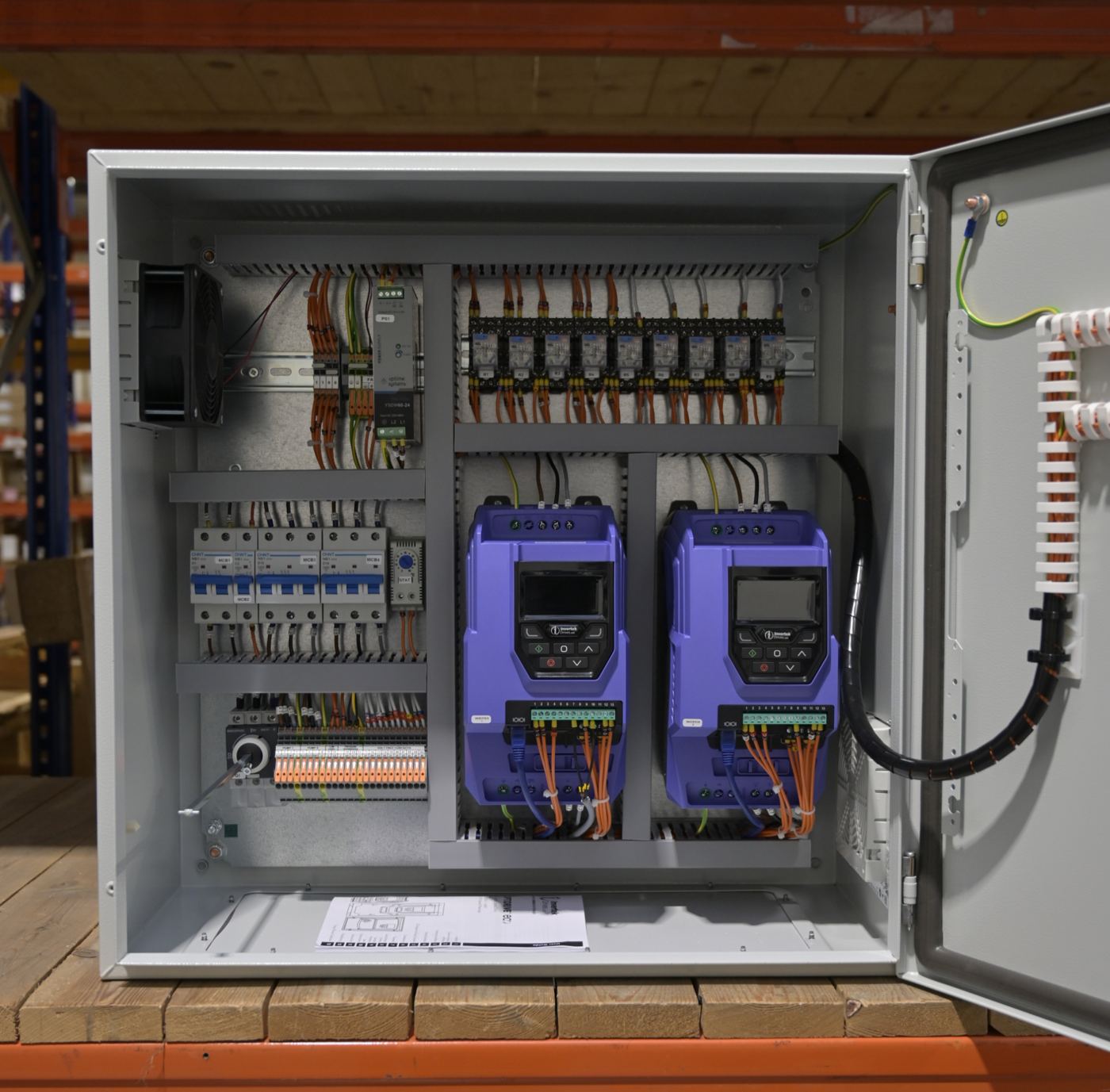
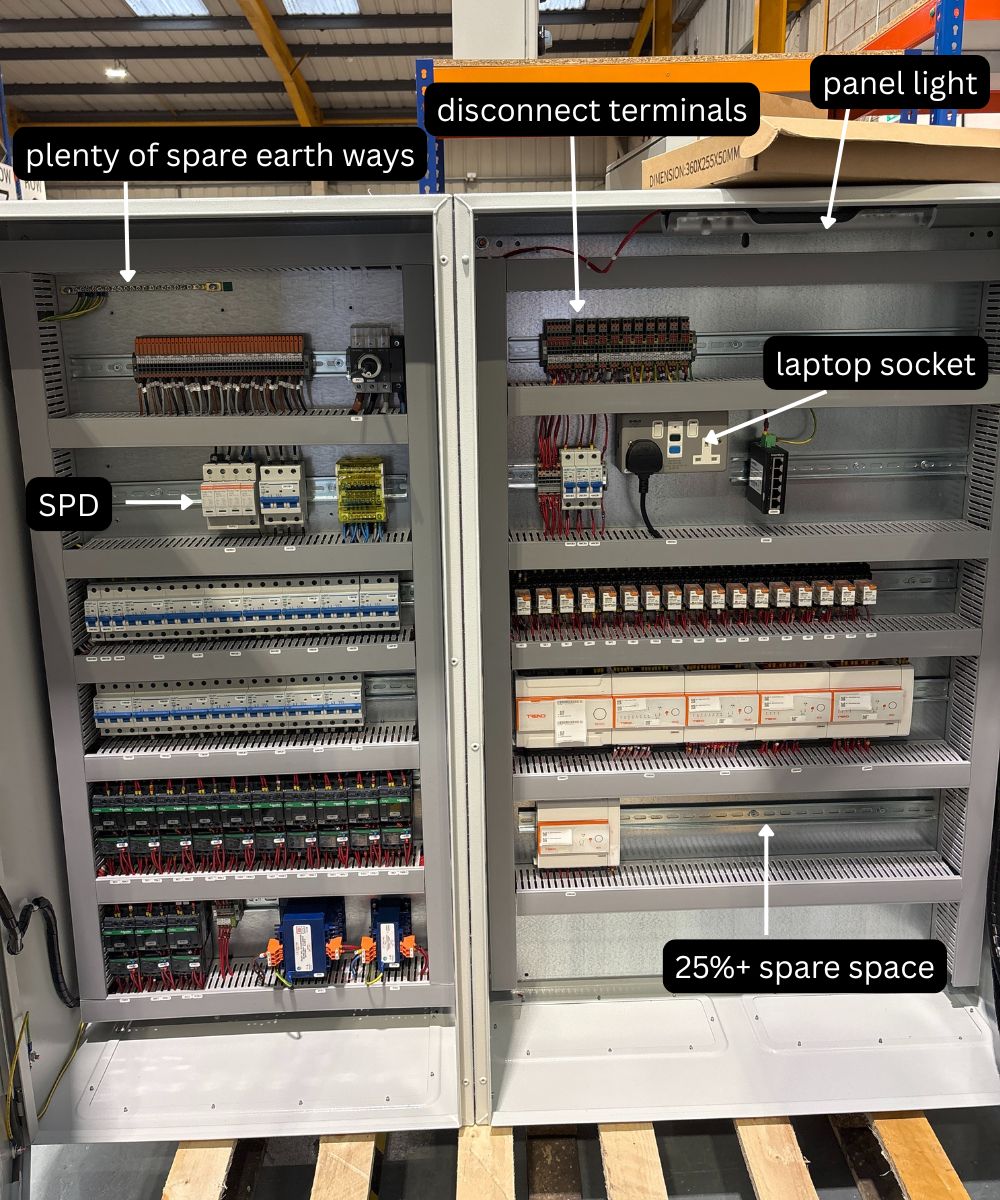
Choosing the right control panel components can be daunting, especially for an onsite engineer having to replace dated parts. Here is a handy overview guide and some things to watch out for.
| Component | Key Information | Be careful of |
|---|---|---|
| Isolator | - Correct amp rating must be at least the rating of the MCB protecting the supply - Number of poles- Handle type: commonly door interlocked or direct mount | Fused isolators can have different size fuses, some are push fit, some are bolt tag. Also if the isolator is interlocked with a handle on the door then you'll need the right length extension shaft (or get a longer one and cut it down). |
| MCB | - Number of poles- Current rating: must protect downstream equipment and wiring. - Curve: A type trips quickly, D type trips slower/higher current | If they are connected to a busbar then you'll need the right 'pitch' (hole centres on wire termination), and if they're in a distribution cabinet then it's best to match the manufacturer. |
| Contactor | - Must be larger current rating than the FLC of the motor.- The coil/control circuit must be correct: can be AC or DC, 24V, 110V or 230V, or occasionally 415V. | If there are 3 contactors and an overload, it could be star/delta starting so the contactor may not be the motor FLC – see blog on star/delta starting. |
| Overload | - Full load current of the motor - To match the contactor it's connected to | Not to be confused with a manual motor starter. |
| Manual motor starter | - Full load current of the motor | Not to be confused with an overload; it combines the functions of an MCB and overload. |
| Transformer | - Input voltage: often 230V or 400V- Output voltage: often 230V, 110V or 24V- Correct VA, which is approximately Watts | A transformer takes an AC voltage and transforms to another AC voltage, they do not output DC power – see power supplies. |
| Power Supply | - Input voltage: often either 230V or 400V- Output voltage: typically 24V or 12V, can be lower for electronics- Output current or power: in Amps or Watts | Volts x Amps = Watts, the transformer wattage is constant so input current will be different to output current. |
| Relay | - Number of poles- Control voltage- Pin configuration: can be 8 pin, 11 pin, 14 pin, octal, etc. | Relays are made up of usually 3 components: the relay itself, the base and the retaining clip that holds it in place. |
| VSD / Inverter | - Supply voltage and number of phases.- Output voltage and number of phases.- IP rating: often IP20 if inside a panel and at least IP55 if wall/equipment mounted. - Will often have several inputs, ensure a replacement drive has all necessary inputs | Inverters need to be programmed, different manufacturers are very different to program. The settings can usually be pulled off the drive if it can still be powered up.Some inverters are 1 phase 230V in, 3 phase 230V out – 3 wires does not necessarily mean 400V. |
| Terminals | - Conductor size: 2.5mm, 4mm, etc- Number of entries: how many wires into each terminal.- Colour changes with use, especially earth. | Mixing feed-through with ground terminals; incorrect ferrule sizes. |
| Indicator Lamps | - Control voltage- Colour- If there is a lamp test function | Many lamps can take a range of AC voltages, or take both AC or DC. |
| Push Buttons | - Momentary or latching- NO/NC contact arrangement | |
| Selector Switches | - Spring return or stay put - Key locked or not - Number of positions: 2, 3 and 4 positions are all common. | Can be both sprung and stay put - sprung one side and stay put the other. |
| Labelling / Ferrules | - Use heat-resistant ferrules; ensure consistent wire numbering. | Wrong wire size ferrules; inconsistent numbering between schematic and panel. |
| Wire | - Cross section: the smallest is usually 0.5mm for control circuit and 1.5mm for power circuits, increasing based on current (A). - Tri-rated for use in control panels - Colour |
Need components? We keep £100,000's of components in stock, get in contact for pricing and availability.
The information provided in this blog post is intended for general knowledge and guidance only. It does not constitute professional advice. Please consult a qualified professional for advice specific to your situation before making any decisions based on this information.
Written by the engineers at G&G Controls, a UK control panel manufacturer in Stoke-on-Trent. For general guidance only; consult a qualified professional for advice on your own installation.
Up next
Why are multiple earths on the same stud banned?
When building electrical control panels, wiring practices are not just a matter of neatness, they are a matter of safety and compliance. An important regulatory standard is BS EN 60204-1: Safety of machinery – Electrical equipment of machines. What BS EN 60204-1 requires:The standard states:“The con