Should you gland both ends of SWA cable?
By Tristan Newton, Commercial Director · 16 January 2026 · 3 min read
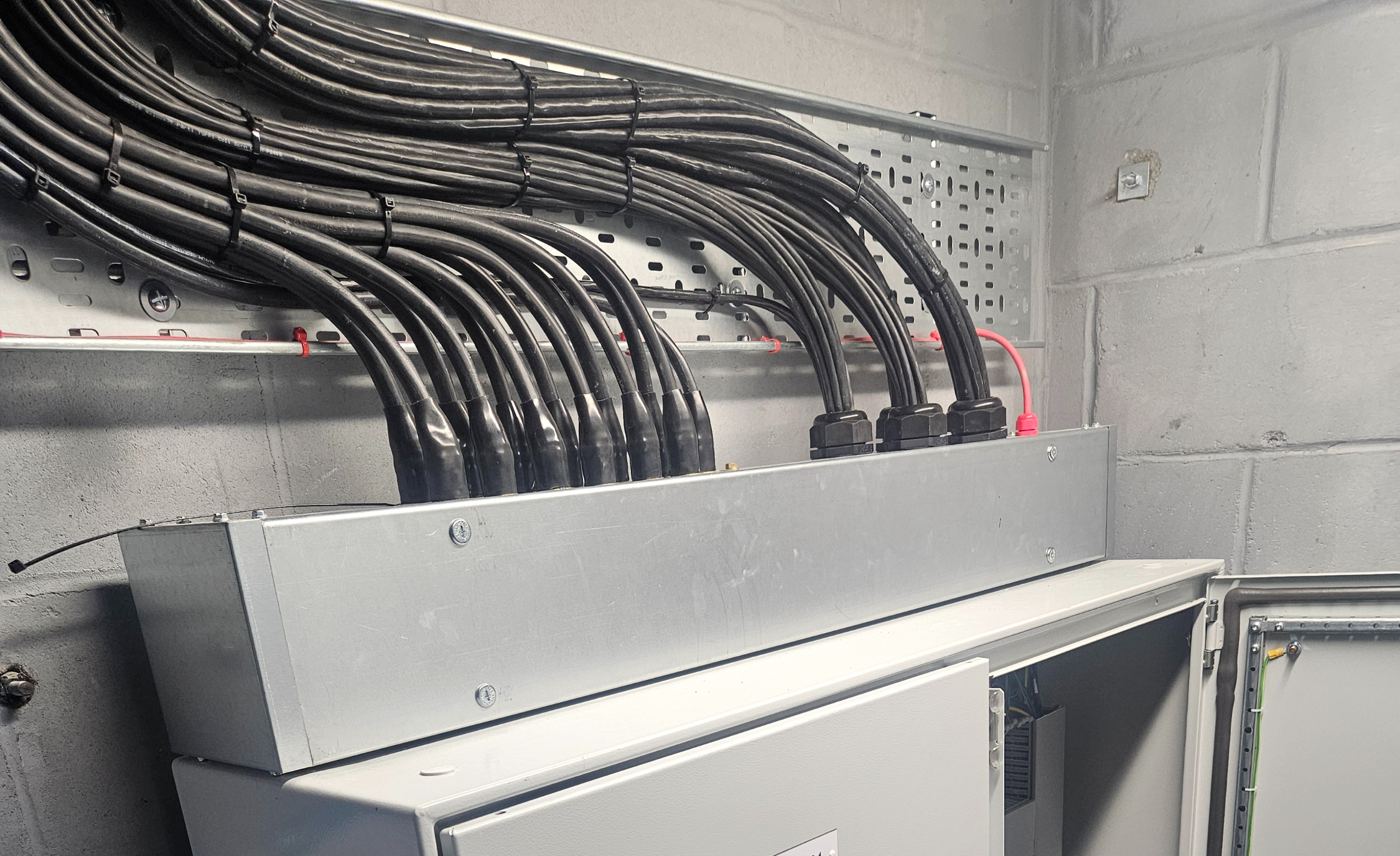
Short answer: Yes, you should gland both ends. Here's why.
This question comes up constantly, usually framed as: "If I'm not using the armour as a CPC, do I really need to gland the load end?"
The argument goes that if you've got a separate CPC within the cable (3-core + earth, or 5-core), and you've glanded and earthed the armour at the supply end, then surely you can just tape up the armour at the other end and call it done?
You can. But you shouldn't.
The mechanical reason
SWA cable is heavy and rigid. It needs proper mechanical restraint at both ends – not just for the installation, but for the life of the cable.
A proper gland does three things:
- Secures the cable – preventing pull-out if the cable is tugged, knocked, or settles over time
- Seals the entry – maintaining the IP rating of the enclosure (particularly important with outdoor CW glands)
- Terminates the armour cleanly – no exposed steel wires that can work loose, short out, or injure someone during maintenance
Taping back the armour and relying on cable cleats alone isn't a termination – it's a bodge. The cable will move, the tape will degrade, and you'll leave sharp steel wires waiting for the next person who opens the enclosure.
The electrical reason
Even if you're not using the armour as your primary CPC, it's still conductive metal that's part of your installation. If it's not properly terminated and bonded, you're creating a potential fault path that isn't properly controlled.
Consider this scenario: a fault develops in the cable and the armour becomes live. If the armour is properly glanded and bonded at both ends, the fault current has a defined path and your protective device will operate. If the load end is just taped up inside a metal enclosure, that fault current is looking for somewhere to go – and it might find the enclosure, or worse, someone touching it.
Glanding at both ends ensures the armour is at the same potential as the exposed-conductive-parts it's connected to. It's basic electrical safety.
What the standards say
BS 7671 doesn't explicitly state "gland both ends" in those words, but Regulation 134.1.1 requires that equipment is installed in accordance with manufacturers' instructions, and every cable gland manufacturer will tell you their product is designed to terminate the cable properly.
More directly, BS EN 60204-1 (for machinery) and BS EN 61439 (for assemblies) both require that cable entries maintain the enclosure's ingress protection and provide proper strain relief. A bit of tape doesn't achieve either.
The only recognised exception is underground cable joints using proper resin-filled joint kits – and those are specifically designed for the purpose, tested, and installed to manufacturer instructions. Taping armour back inside a panel is not the same thing.
Practical guidance
For indoor terminations (e.g., into a control panel):
- Use a BW gland (indoor type, no seal)
- Ensure the armour is properly clamped and makes good contact with the gland body
- Use an earth tag to bond the gland to the panel earth bar
For outdoor terminations (e.g., into a kiosk or external enclosure):
- Use a CW gland (weatherproof type, with seal)
- Ensure the outer seal sits properly on the cable sheath
- Check the gland thread seals correctly against the enclosure
Gland sizing:
- Don't assume – check the manufacturer's sizing chart for your specific cable
- SWA from different manufacturers can have slightly different outer diameters
- A gland that won't tighten properly isn't doing its job
The information provided in this blog post is intended for general knowledge and guidance only. It does not constitute professional advice. Please consult a qualified professional for advice specific to your situation before making any decisions based on this information.
Written by the engineers at G&G Controls, a UK control panel manufacturer in Stoke-on-Trent. For general guidance only; consult a qualified professional for advice on your own installation.
Up next
The dangers of emergency stops, and why they don't always do what you think
In the industrial world, the "big red button" is a universal symbol of safety. We are conditioned to believe that hitting an emergency stop (also known as an E-stop) acts as a magic wand that instantly renders a machine harmless. However, this assumption is dangerous. E-stops are complex c