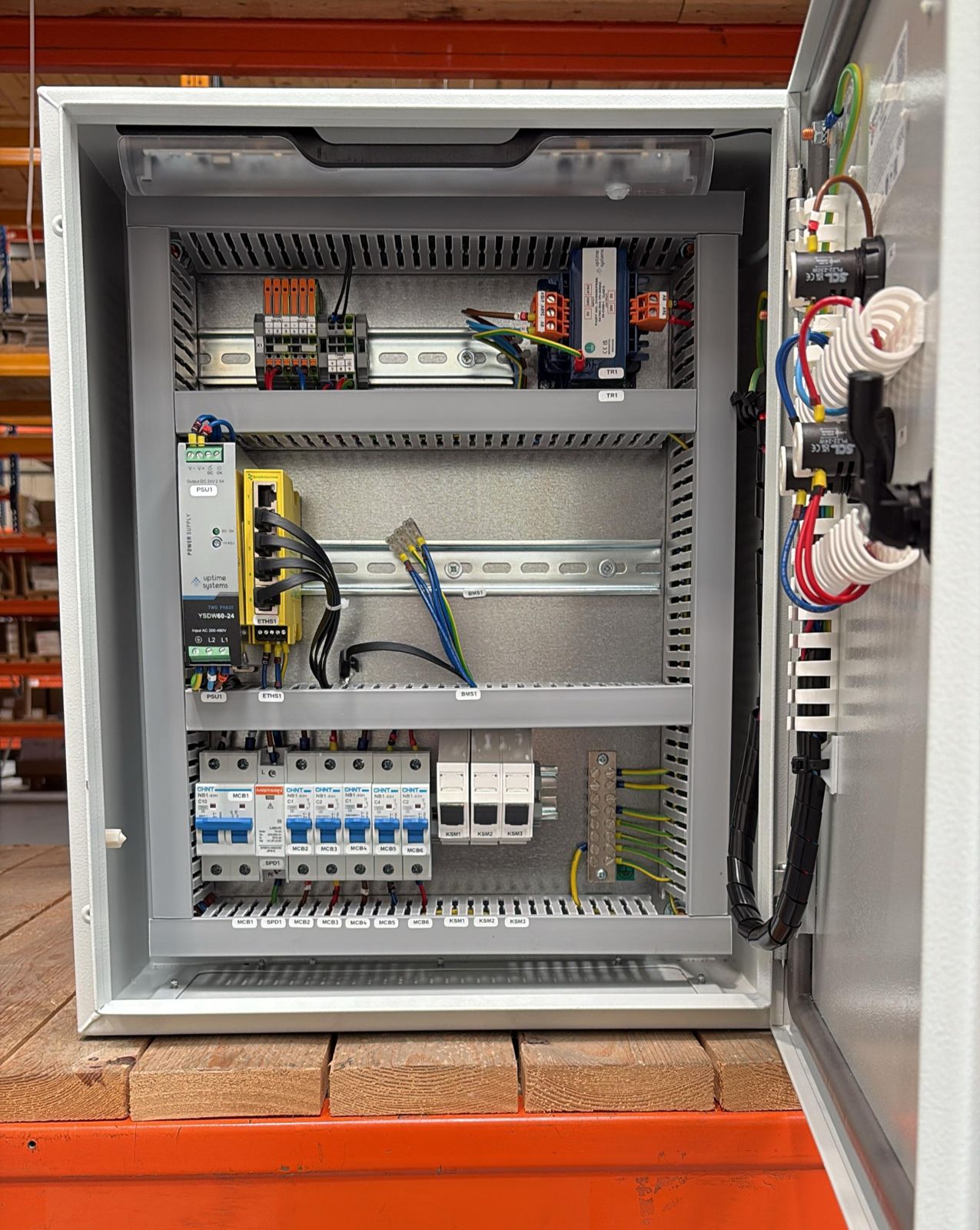
BS EN 61439-2 for panel buyers: what the certificate covers, and what it doesn't
By Tristan Newton, Commercial Director · 26 June 2026 · 5 min read
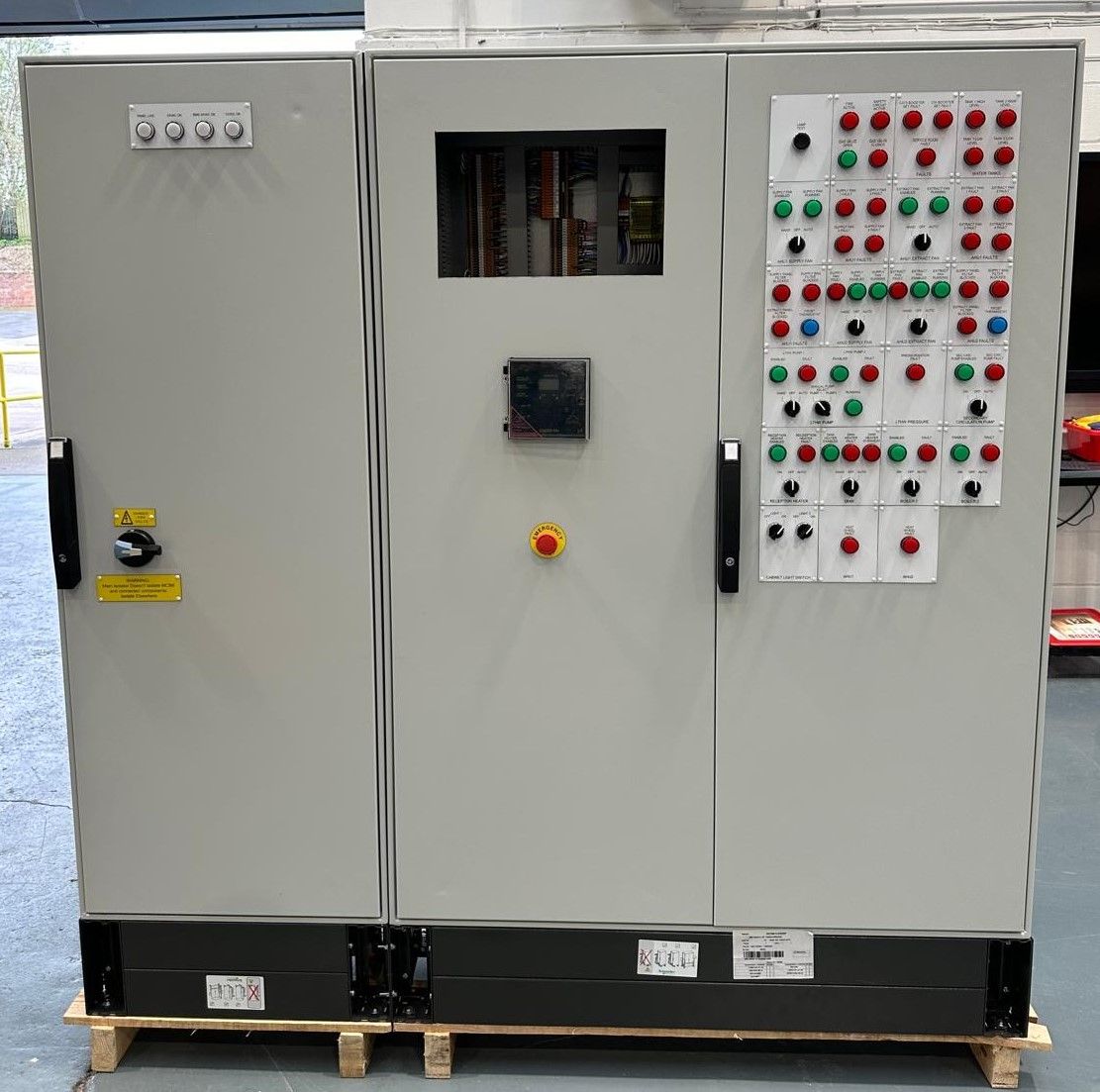
If you buy control panels, you will see "built to BS EN 61439-2" on every quotation, and you will be right to want it there. But the phrase covers a lot of ground, and it is worth knowing what it actually guarantees, because two panels can both carry it and be very different pieces of work.
This is the standard from the buyer's side of the desk.
What BS EN 61439 is
BS EN 61439 is the British and European standard for low-voltage switchgear and controlgear assemblies: the box, the switchgear and the wiring together, as a finished thing. It replaced the old BS EN 60439 in 2014, and the change that mattered was that the old idea of a "partially type-tested assembly" disappeared. Every assembly now has to be verified, one way or another.
It comes in parts. Part 1 is the general rules that apply to everything. Part 2 is for power switchgear and controlgear assemblies, which is the part a control panel is built to. (Part 3 covers distribution boards operated by ordinary people, which is why your consumer unit is not a 61439-2 product.) Panels that control machinery also have to satisfy BS EN 60204-1, the standard for electrical equipment of machines, which is why you will see both on a G&G panel.
Two kinds of verification
The standard splits responsibility in two, and this is the bit worth understanding.
Design verification proves that the design of the assembly works: that it will carry its rated current without overheating, withstand a short circuit, keep people away from live parts, and so on. It is done once, by whoever is responsible for the design, and it can be done by testing, by calculation or comparison with a tested design, or by following the standard's design rules. For most control panels, the design verification is a mix: the switchgear and enclosure makers have tested their products, and the panel builder verifies the combination by comparison and calculation.
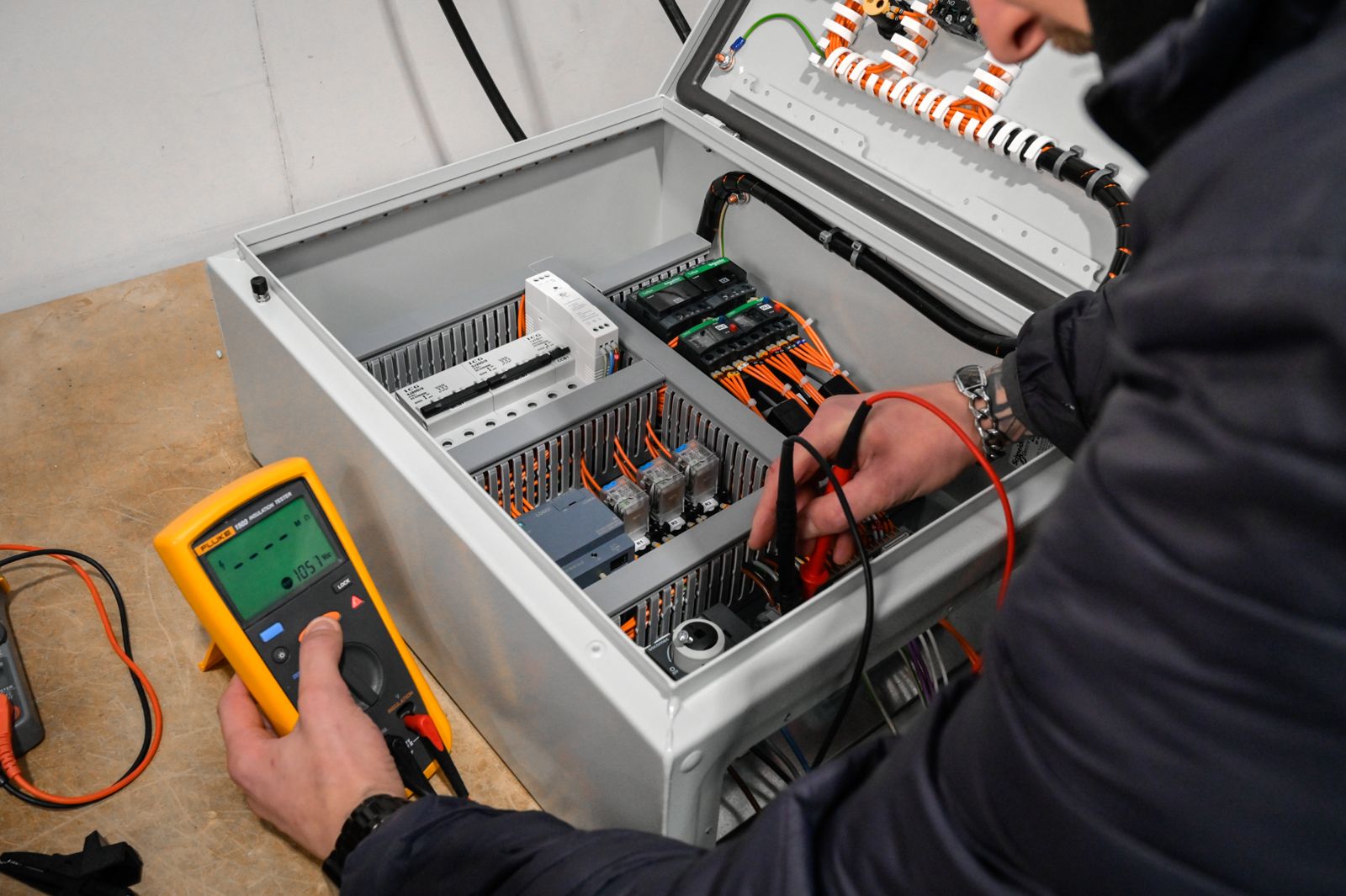
Routine verification is done on every single panel before it leaves the factory. It checks that this particular assembly was built as designed: enclosure and degree of protection, clearances and creepage distances, protection against electric shock and continuity of the protective circuit, the built-in components, the internal wiring and connections, terminals for external conductors, mechanical operation, dielectric properties, and wiring and functional performance. That is the test certificate. What a control panel test certificate should include goes through it.
So when a builder says "built to 61439-2", the question to ask is: who did the design verification, and what does your routine verification consist of? A good builder can answer both in a sentence.
The ratings on the plate
A 61439-2 assembly has a rating plate with, among other things:
- Rated voltage and rated current of the assembly and its circuits;
- Rated short-circuit withstand, the fault current the assembly can survive, which has to be at least the prospective fault current at the supply;
- Degree of protection, the IP rating (IP ratings explained);
- The Form of internal separation, if any.
Forms of separation
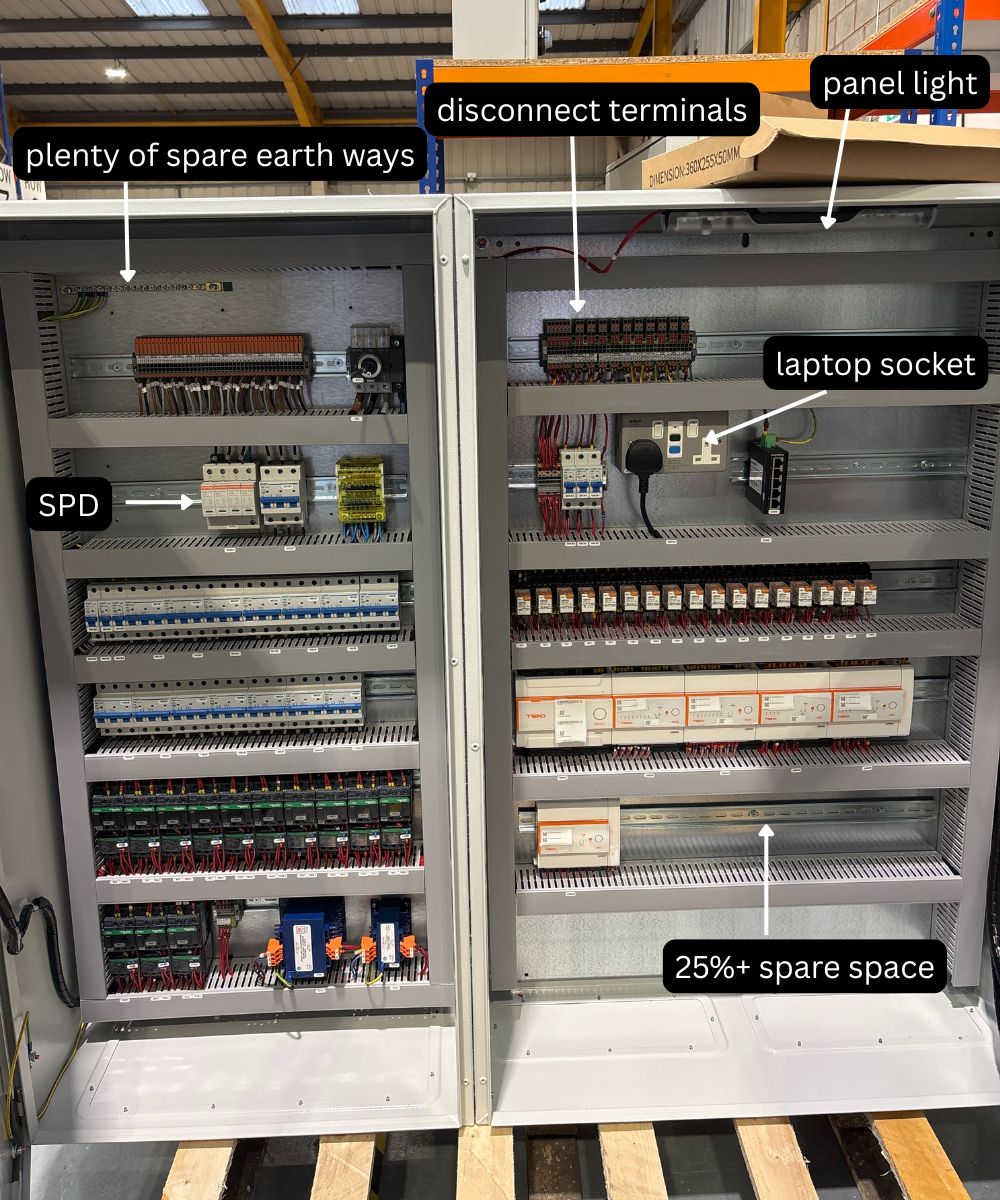
Part 2 defines how the inside of the panel is divided up to protect someone working on one part from live parts elsewhere. Form 1 has no internal separation. Form 2 separates the busbars from the functional units. Form 3 and Form 4 separate the functional units from each other as well, with 4 also separating their terminals. Each has an a and b variant depending on where the terminals sit.
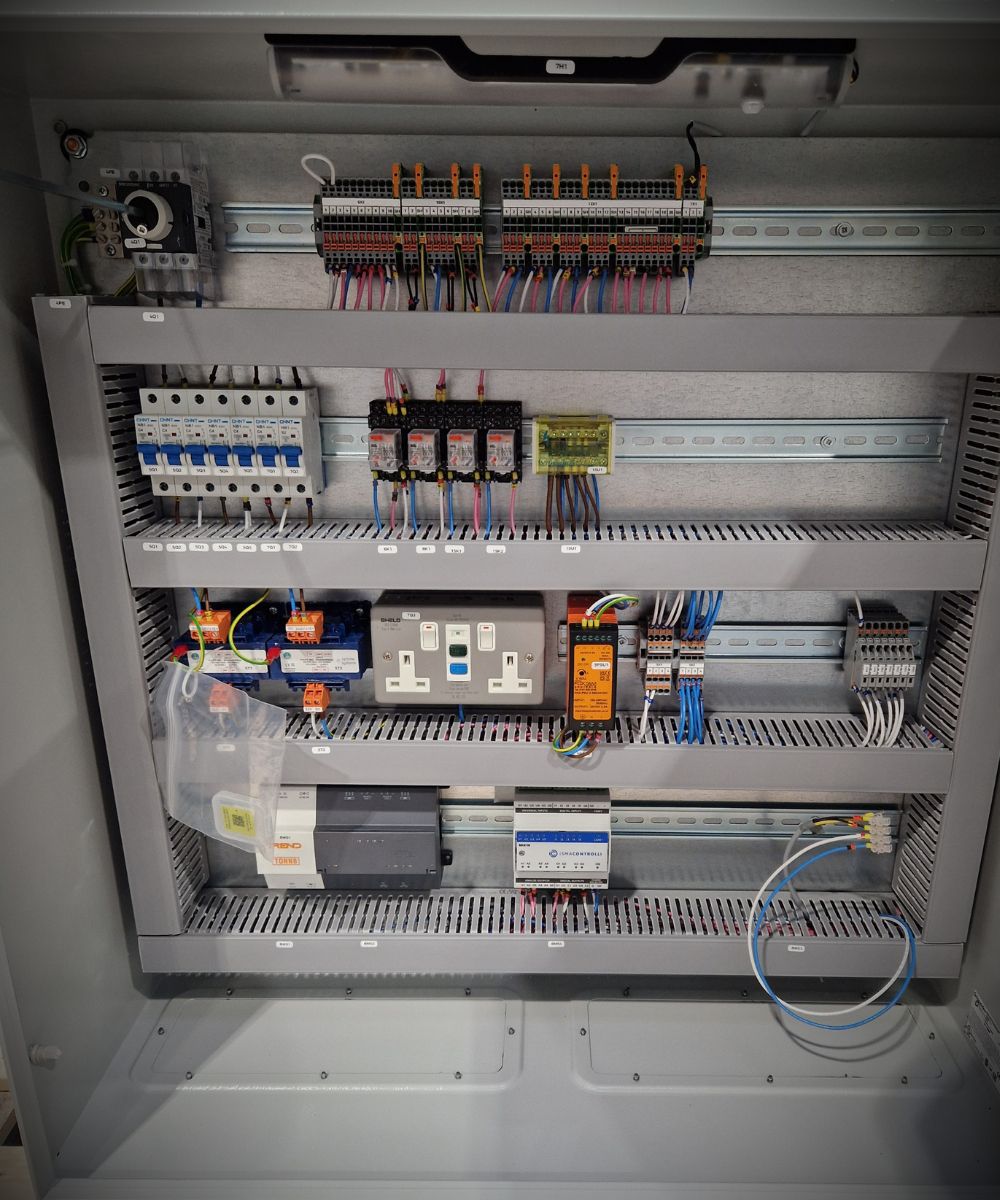
A standard pump panel is Form 1 or Form 2; a BMS motor control centre for a building is often specified as Form 3b or 4b. The Form changes the size and cost of the panel considerably, so it should be in the specification, not discovered at the drawing stage. Form 4 or Form 2 enclosures: what does it mean? goes into it.
What the standard does not tell you
Compliance with 61439-2 does not tell you:
- whether the design is any good. A panel can be fully verified and still be badly laid out, hard to maintain and wired with the cheapest components that pass. The standard sets a floor, not a ceiling.
- whether it suits the site. The standard does not know your pump, your supply or your water company's specification.
- whether it will still be compliant after installation. A gland plate with a hole cut in it, or an extra circuit added on site, is no longer the verified assembly.
Those are the things to judge a panel builder on, alongside the standard: the components they choose, the drawings they give you, and whether they will pick up the phone afterwards.
Questions to ask before you order
- Is the panel built and verified to BS EN 61439-2, and BS EN 60204-1 where it controls machinery?
- Who holds the design verification, and how was it done?
- What does the routine test on each panel consist of, and do I get the certificate?
- What rated short-circuit withstand is the panel built for, and does it match my supply?
- What Form of separation, and what IP rating?
- Do I get a wiring diagram with the panel, and is it an as-built?
Every G&G panel is built to BS EN 61439-2 and BS EN 60204-1, routine tested, and ships with its wiring diagram, test certificate and serial number. Standards and compliance sets out what that covers.
Frequently asked questions
Is BS EN 61439 a legal requirement?
Not directly. The legal requirements are the Electrical Equipment (Safety) Regulations and the EMC Regulations (and their EU equivalents), and building to a harmonised standard such as BS EN 61439 is how a manufacturer demonstrates compliance with them. In practice, any competent specification asks for it.
What is the difference between BS EN 61439-1 and 61439-2?
Part 1 is the general rules for all assemblies and is never used alone. Part 2 adds the requirements specific to power switchgear and controlgear assemblies, which is what a control panel is. A control panel is "built to 61439-2", which implies Part 1.
Does a small panel need the same verification as a big one?
Yes, the same checks apply. Some are simpler for a small panel: for example, temperature rise for a low-current assembly can often be verified by calculation rather than test, and the dielectric test on an assembly with incoming protection up to 250A can be an insulation resistance measurement.
Does 61439-2 cover the panel once it is installed?
No. The assembly is verified as it leaves the manufacturer. Site modifications, added circuits and cut-outs are the responsibility of whoever makes them, and can invalidate the verification.
Written by the engineers at G&G Controls, a UK control panel manufacturer in Stoke-on-Trent. For general guidance only; consult a qualified professional for advice on your own installation.
Up next
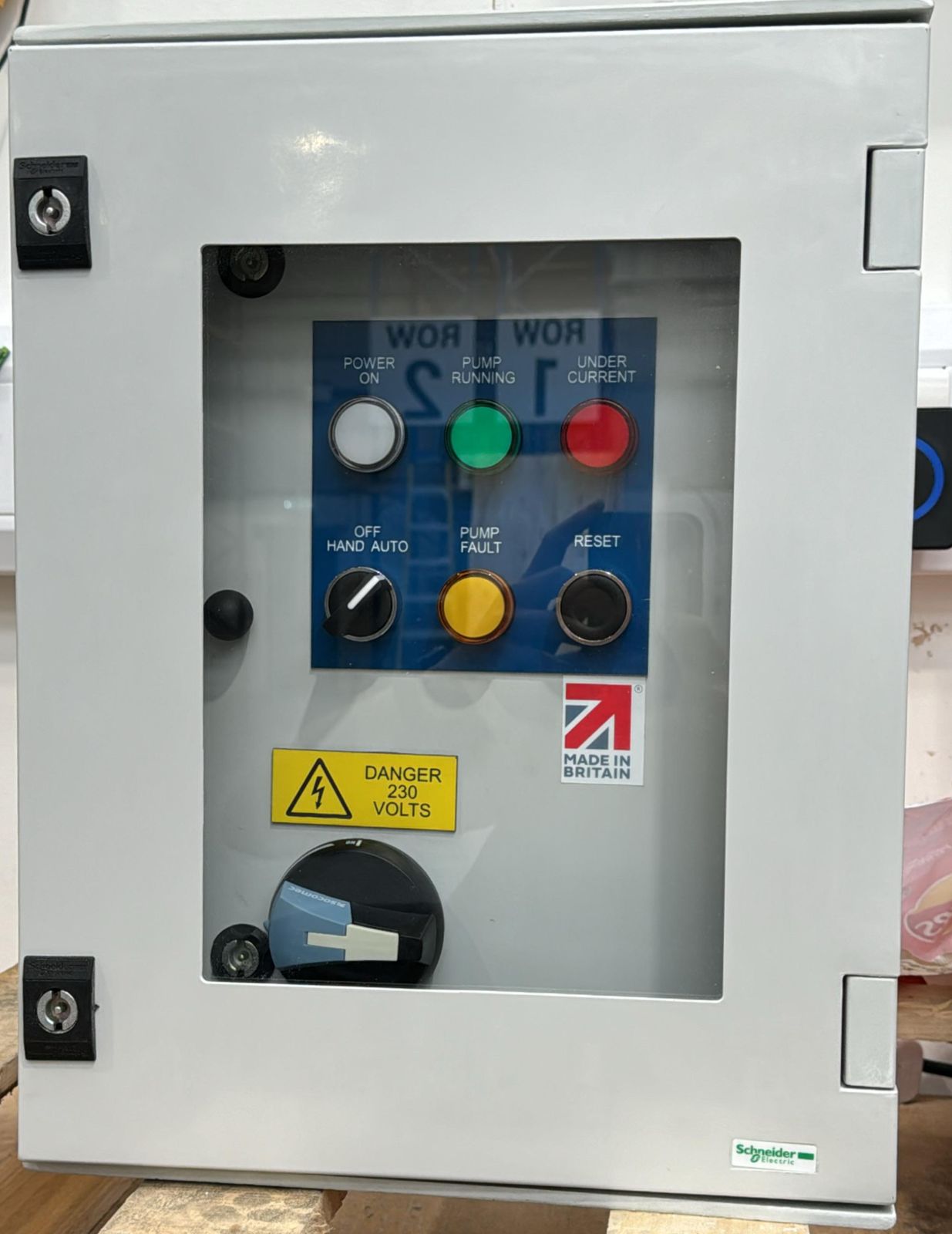
IP ratings explained: IP55, IP65 and IP66 for control panels
What the two digits mean, which rating a control panel needs indoors, outdoors and in a kiosk, and why a rating only holds if the glands and door are right.