Why does my pump keep tripping? A diagnostic checklist
By Tristan Newton, Commercial Director · 29 May 2026 · 5 min read
A pump that trips once has had a bad day. A pump that keeps tripping is telling you something, and the panel is where it tells you. Here is how to work through it, from the most common cause to the least, and what each one looks like from the front of the panel.
As always: only work inside a panel if you are competent to, isolate and prove dead before you touch anything, and follow your safe isolation procedure.
First, which trip?
There are two different things people call "tripping":
- The overload has tripped. The pump's overload relay inside the panel has operated because the motor drew too much current for too long. The trip lamp for that pump is lit. This is the pump protecting itself, and it is by far the most common.
- The breaker or RCD has tripped. The supply to the panel, or to the pump, has gone. No lamps, or only the power lamp. This is usually a cable, a wet motor or an earth fault.
They have different causes. Establish which you have before doing anything else.
If the overload keeps tripping
Work down the list. Stop when you find it.
1. Is the overload set correctly?
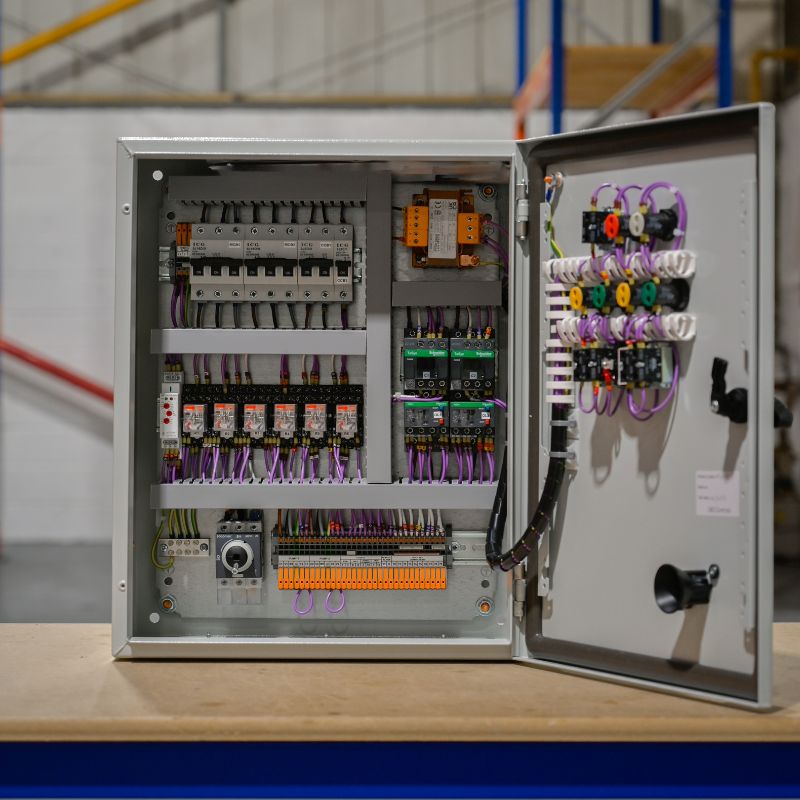
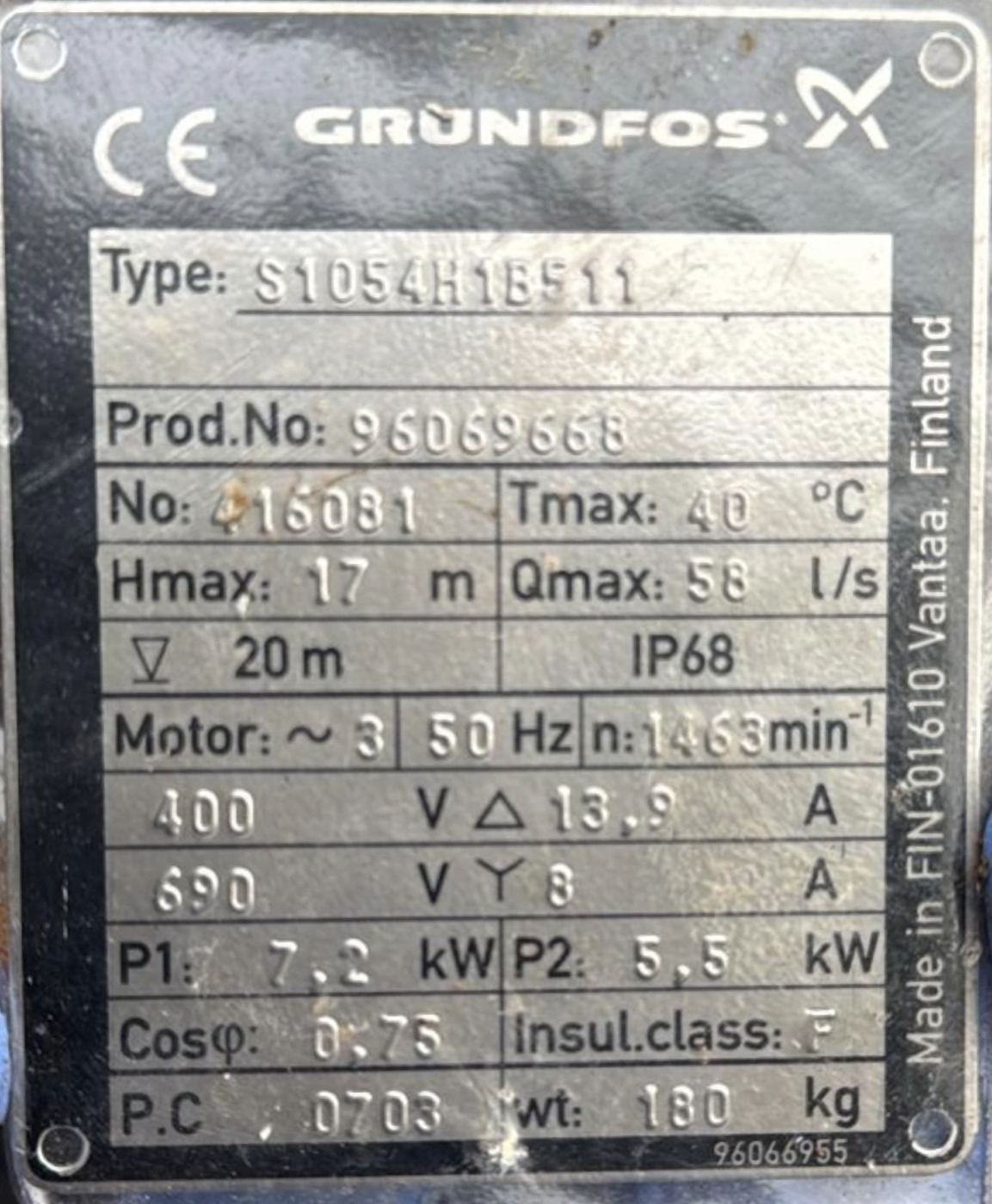
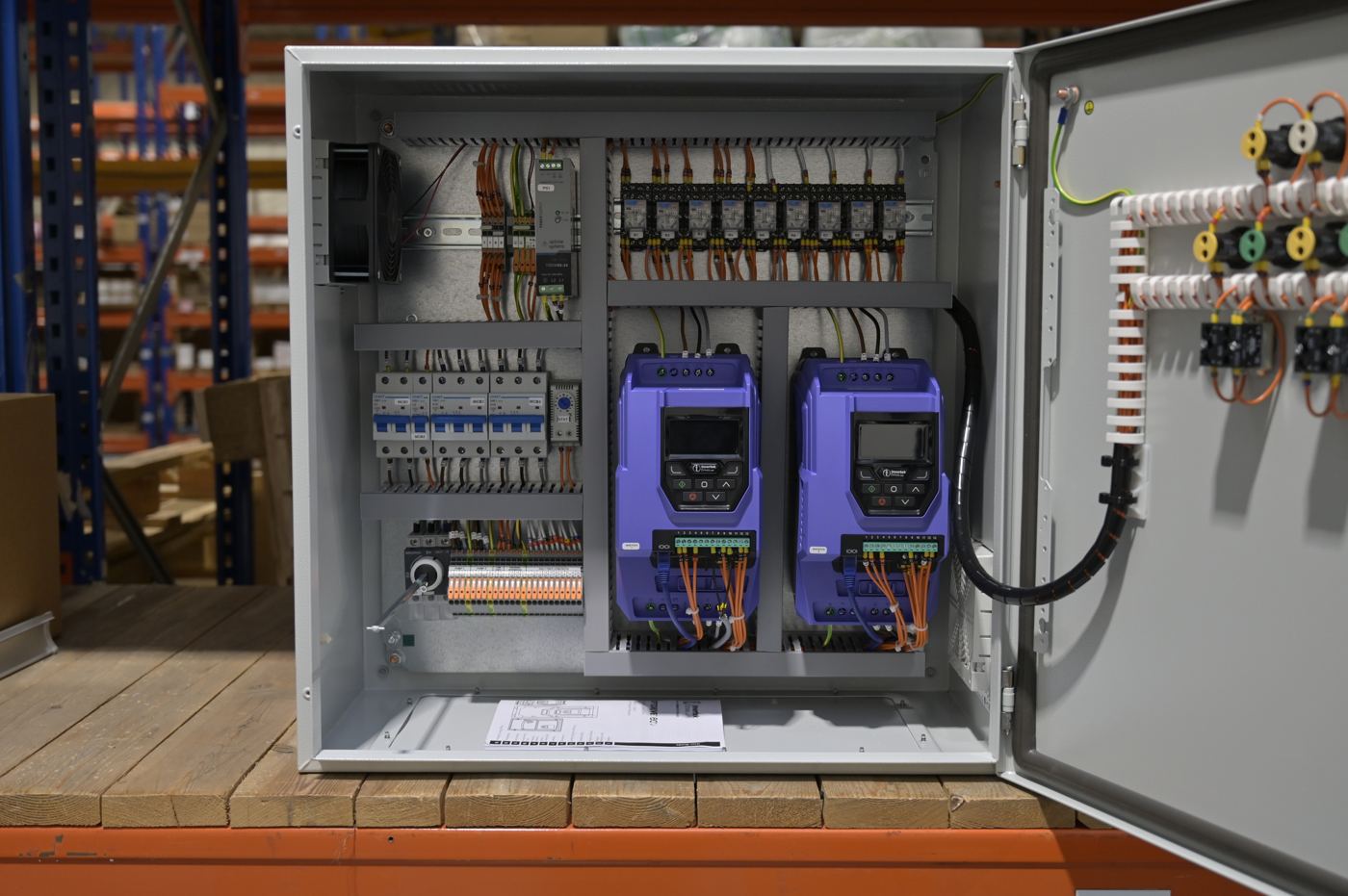
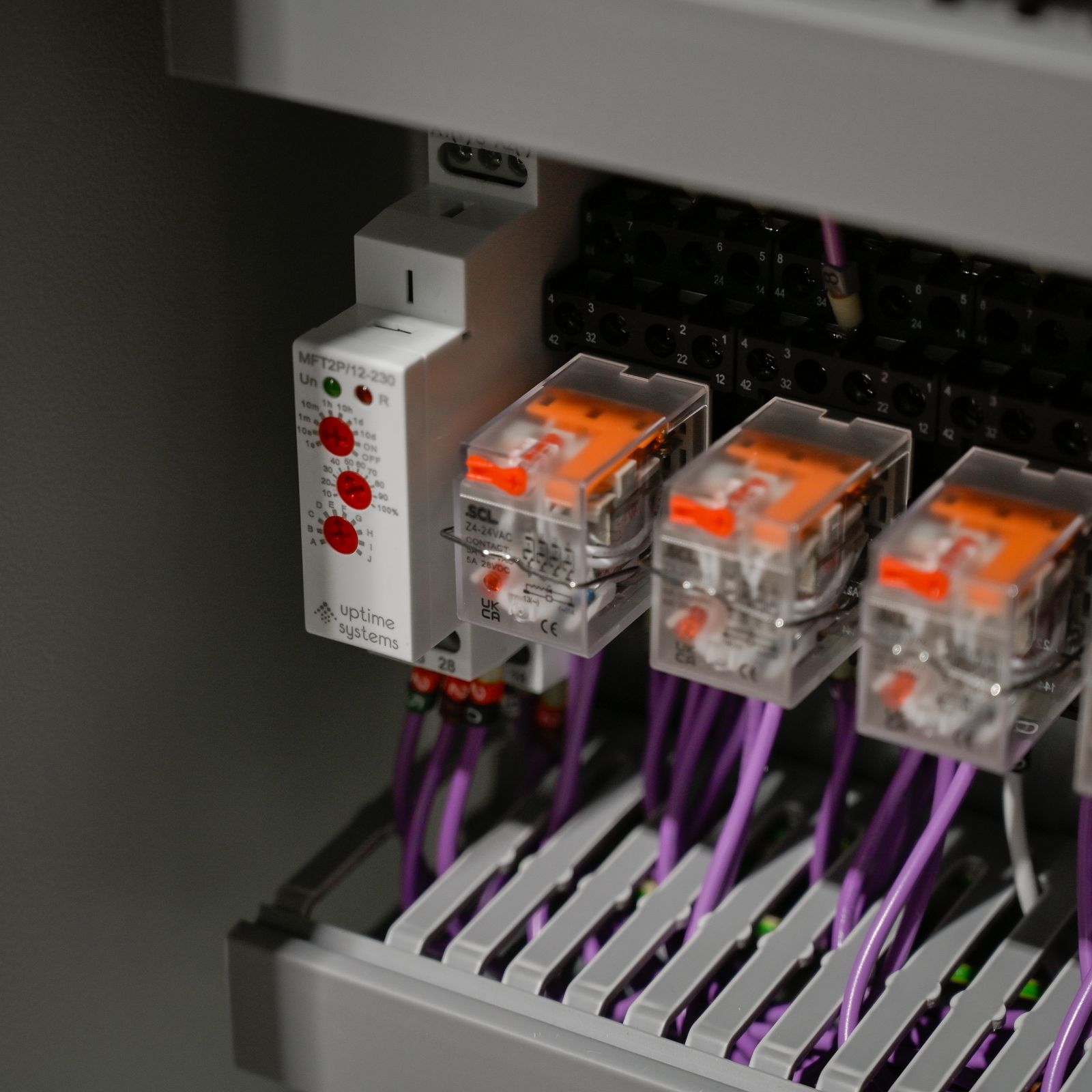
Open the panel (isolated) and compare the overload dial with the full load current on the pump nameplate. An overload set below the motor's FLC trips on normal running. An overload set well above it will not trip until the motor is cooking. What you are doing wrong with overloads covers the setting; what's the full load current of the motor? covers finding the number.
Set correctly and still tripping? Carry on.
2. Is the pump blocked?
The classic. Wipes, rags, fat or grit around the impeller make the motor work harder, the current rises and the overload trips. On a single-phase pump it happens sooner and more often. Why single-phase pumps block more than three-phase.
Signs: the pump trips after running for a while rather than immediately; it trips more in one direction of duty; it has been getting noisier. Lift the pump and look.
3. Is it running the right way?
On a three-phase pump, wrong rotation means the impeller pushes water the wrong way: low flow, high current, long run times and eventually a trip. Check rotation on commissioning and after any work on the supply or the pump cable. Two phases swapped at the pump end is all it takes.
4. Is the voltage right?
Low voltage means high current for the same work. Measure the supply at the panel with the pump running. A long single-phase cable run to a pump station is a common cause of a supply that reads fine off-load and sags when the pump starts.
5. Single phase: is it the capacitor?
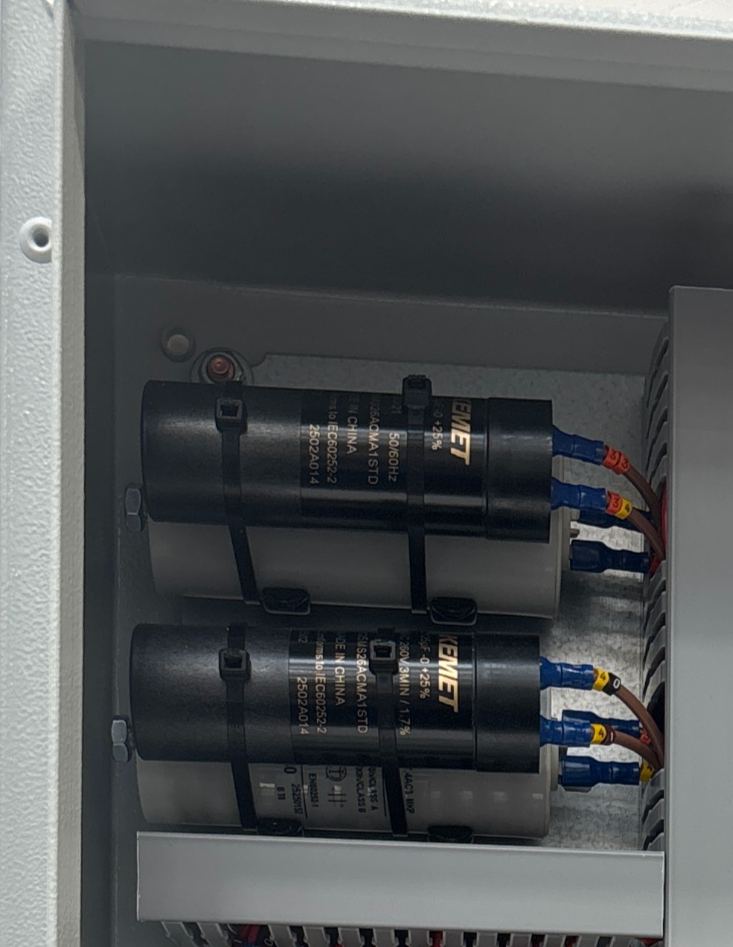
A single-phase pump needs its start and run capacitors to be right. A failed or wrong-value capacitor gives a hard start, high current and a trip. Why single-phase motors need capacitors and capacitor sizes.
6. Is it the motor?
Insulation resistance test the pump, cable disconnected at the panel. A winding that has started to break down draws more current and trips the overload before it fails completely. Compare the readings with the pump maker's minimum.
7. Is it the overload itself?
Rarely, an overload relay that has tripped many times drifts. If everything above checks out and it still trips at a current below the setting, replace it.
If the breaker or RCD keeps tripping
- Water in the cable or the motor. Insulation resistance test the pump and cable separately. A submersible pump cable with a damaged sheath, or a pump with a failed seal, will trip an RCD long before it trips an overload. If the pump has seal leak contacts, the panel's seal leak lamp may already be telling you.
- A damaged cable between panel and chamber. Look for anything that has been dug, crushed or chewed.
- A control circuit fault: a float switch cable in the water with damaged insulation, a stuck contactor, a loose neutral.
- The wrong breaker. A pump's starting current is several times its running current. A breaker with the wrong characteristic trips on every start.
Then, before you leave
Reset the trip once, in auto, and watch a full pumping cycle. Write down the running current of each pump with a clamp meter and put it on the commissioning sheet in the door, next to the FLC: the next person can then see at a glance whether the pump is drawing more than it used to.
If the station has a Telemetrix panel, the trip will have gone out as a text or email at the time it happened, and the Dashboard shows the run history, so a pump that has been running longer each cycle for weeks is visible before it trips at all.
Still stuck? Ring the technical line on 01782 320400 with the panel's serial or P number and what the lamps are showing.
Frequently asked questions
The trip lamp is on but the pump runs in hand. Is the pump all right?
The overload only protects the pump in auto and in hand on most panels, so a pump that runs in hand has not necessarily been checked. Reset the overload and run it in auto while measuring the current. If it is above the nameplate FLC, the pump is working too hard: blocked, wrong rotation or worn.
How many times can I reset the overload?
Once, to see whether it was a one-off. If it trips again, find the cause. Repeated resets cook the motor windings and turn a blockage into a burnt-out pump.
Both pumps keep tripping. What does that mean?
Something common to both: the supply voltage, the overload settings if both were set wrong, a rising main that is blocked or has a closed valve, or a chamber full of debris. Two pumps blocking together is unusual; two pumps straining against a closed valve is not.
Could it be the panel?
Occasionally: a contactor with burnt contacts, a loose connection heating up, or an overload that has drifted. If the pump measures fine on test and the current at the panel is normal, look at the panel components. A G&G panel comes with a test certificate and a serial number, and we can talk you through it on the technical line.
Written by the engineers at G&G Controls, a UK control panel manufacturer in Stoke-on-Trent. For general guidance only; consult a qualified professional for advice on your own installation.
Up next
Why single phase motors need capacitors
Let's start with a simple fact - three-phase motors are better than single-phase motors. More torque, no capacitors, fewer complications. But a huge proportion of real-world applications only have single-phase power available, and single-phase motors can't start on a live and neutral alone. That's w